
Recovery
Medical Tourism
Plastic and Cosmetic Surgery
Plastic Surgery Recovery House vs. Hotel in Guadalajara: A Real 10-Day Cost Comparison
Discover practical recovery advice, expert tips, and inspiration to help you make the most of your post-op procedure in Guadalajara.
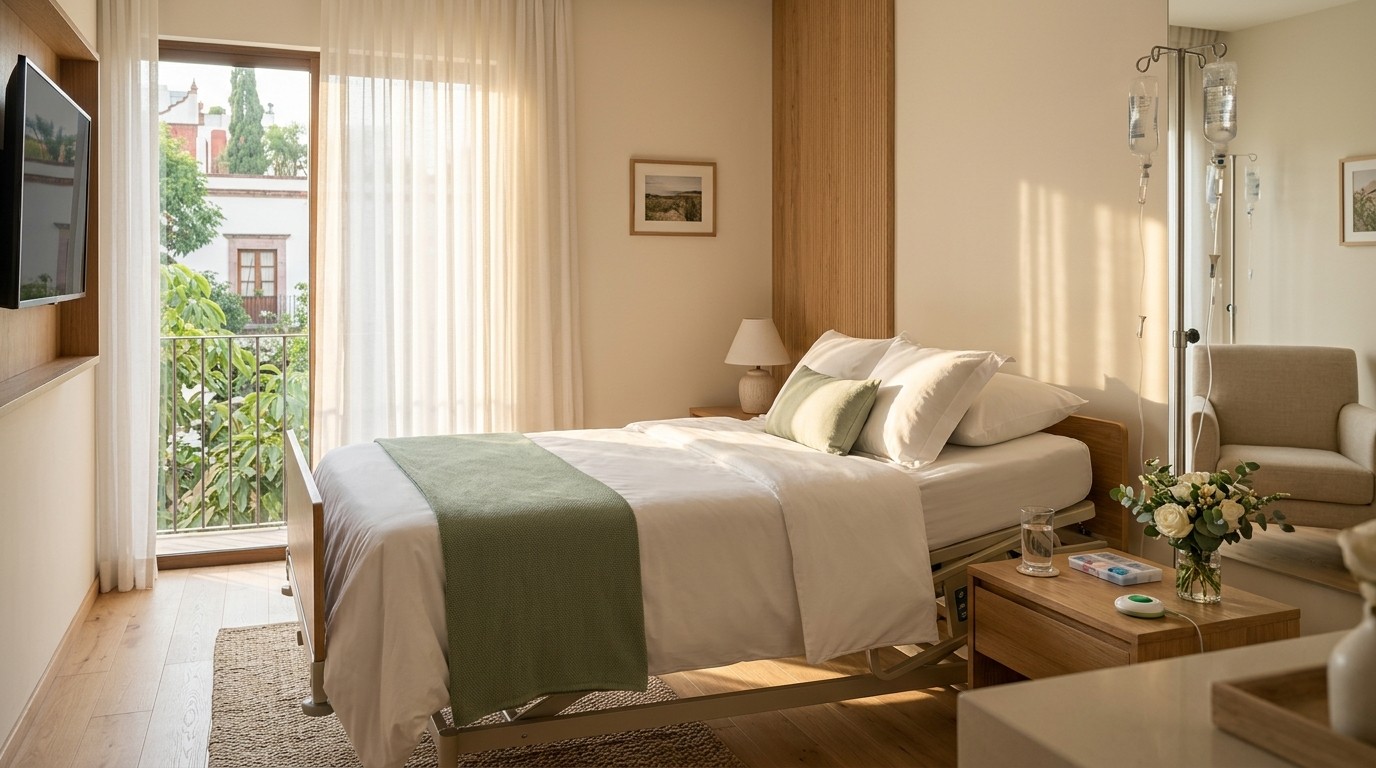
Recovery House vs. Hotel After Plastic Surgery: 10-Day Cost Reality
Most patients comparing options focus on the nightly rate and stop there. A 3-star hotel in Guadalajara runs around $125 a night. A dedicated post-surgical recovery house runs around $170. That $45 difference is the wrong number to look at. Over a 10-day recovery, building the equivalent level of care in a hotel costs roughly $3,920, more than double what a recovery house charges for the same window. Here is the full breakdown.
Key Takeaways
A properly supported 10-day hotel recovery in Guadalajara costs an estimated $3,920 when nursing, food, transport, and therapy are added. A recovery house averages $1,700 for the same period with everything included.
The first 72 hours after plastic surgery are the highest-risk window for complications. Seroma occurs in roughly 10.9% of abdominoplasty patients globally (PubMed meta-analysis, 27,834 patients) and infection rates climb further in post-weight-loss surgery. These need trained clinical eyes, not hotel staff.
A recovery house companion stays in the same room, has their meals included, and doesn't need to become a caretaker. In a hotel, your companion takes on nursing duties with no training.
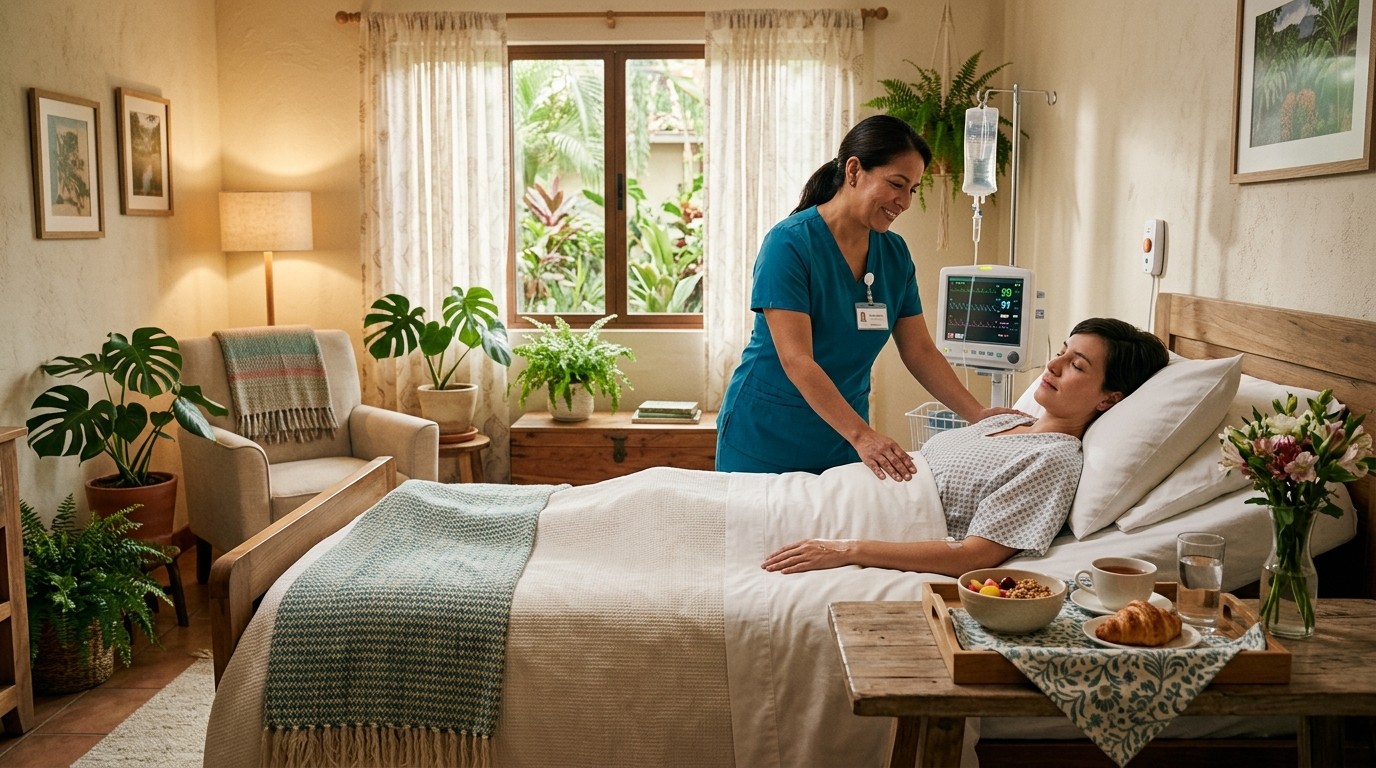
What Does a 10-Day Recovery Actually Cost?
A real 10-day post-surgical stay at a hotel costs approximately $3,920 once nursing, food, transport, lymphatic drainage, and airport shuttles are added on top of the $125 nightly rate. A recovery house in Guadalajara averages $1,700 for the same window with everything included. The table below breaks down every line item.
Expense | Hotel + DIY Setup | Recovery House |
|---|---|---|
Accommodation (10 nights) | $1,250 ($125/night) | Included |
Food, 3 meals per day | $450 ($45/day) | Included |
24/7 nursing (2 shifts daily) | $1,600 ($160/day) | Included |
Daily transportation (Uber) | $300 ($30/day) | Included |
Lymphatic drainage (5 sessions) | $200 ($40 each) | Included |
Airport shuttle, both ways | $120 ($60 each way) | Included |
10-day total | $3,920 | $1,700 |
The math: A recovery house saves approximately $2,220 over 10 days compared to assembling the same care independently through a hotel. And that $3,920 hotel figure assumes you actually hire the nurse. Most patients don't, which is a different problem entirely.
What the table does not include on the hotel side: snacks between meals, incidentals, medication pickup, companion food, and any unexpected transport to follow-up appointments. These add up quickly.
What Does the Hotel Price Leave Out?
The $1,700 at a recovery house covers everything in the cost table above. But it also includes things that don't have a clean line-item equivalent in the hotel column, the kind of details that quietly determine whether a recovery goes smoothly or sideways.
Your medical file is on-site. Every recovery house patient arrives with a clinical file provided by their surgeon, including procedure notes, drain instructions, medication schedule, and follow-up protocols. That file lives with the nursing team. Medications are administered on schedule, not left to the patient to remember while managing post-anesthesia grogginess.
Every room and restroom has an emergency assistance pager. If something feels wrong at 2am, one button reaches trained nursing staff. In a hotel, that same situation means calling a front desk, then explaining your medical situation to someone with no context.
Fast internet and Netflix are included, because the mental side of recovery matters. Boredom and anxiety slow healing in measurable ways.
And if you bring someone with you, their meals are included. They have their own bed. They can rest, recover from travel, and be present for you without having to cook, navigate an unfamiliar city for groceries, or manage your medical needs without training.
Why Do Medical Differences Matter More Than Price?
Cost aside, the more important comparison is clinical. Hotels provide hospitality. Recovery houses provide supervised convalescence. These are not interchangeable, and the published complication data makes the gap concrete: seroma alone affects roughly 1 in 10 abdominoplasty patients (Aesthetic Plastic Surgery, 2021), and that rate climbs higher in post-weight-loss and combined procedures.
What Happens at 3am in a Hotel?
The 72 hours immediately after plastic surgery are the highest-risk window for complications. Seroma accumulation, early signs of infection, drain dysfunction, and adverse anesthesia reactions can all present in this window. A trained nurse checking on a patient at 3am catches these early. Hotel staff do not.
Seroma is the most common local complication after abdominoplasty, with a global prevalence of 10.9% across 143 studies and over 27,000 patients (PubMed meta-analysis). In post-weight-loss patients, that rate jumps to 23.6%, with infection appearing in 13.9% of cases. Detecting a seroma early is the difference between a simple bedside drainage and a surgical revision. Catching infection at the first warning sign is the difference between a course of antibiotics and a hospitalization. These are not edge cases. They are the reason post-surgical monitoring exists as a medical standard.
For a fuller picture of what each phase of recovery actually involves and where the highest-risk windows fall, our week-by-week recovery timeline walks through it day by day.
Does Hyperbaric Oxygen Therapy Actually Help?
The clinical evidence is consistent. The RevitalAir semi-rigid hyperbaric chamber accelerates tissue healing by increasing oxygen delivery to surgical sites, reducing inflammation, and lowering infection risk. In a controlled facelift study, mean wound healing time dropped from 36.9 days in the control group to 13.3 days in the HBOT group (Aesthetic Surgery Journal Open Forum, 2023). A separate 2025 systematic review across 11 studies and 734 patients found HBOT consistently reduced complications including infection, wound breakdown, and tissue ischemia.
A hotel does not have a hyperbaric chamber. Getting to a hyperbaric clinic post-operatively requires transportation, physical effort, and coordination that most patients cannot manage in the first week. Having sessions scheduled into your daily recovery routine, in-facility, is categorically different from arranging separate clinic appointments while in compression garments and surgical drains.
Food Built for Healing
Post-surgical nutrition is not general healthy eating. It is low-sodium to reduce swelling, anti-inflammatory, high-protein to support wound healing, and calibrated to the digestive slowing that follows anesthesia. Ordering delivery or eating hotel restaurant food does not hit those parameters consistently. Recovery house meals are planned around the post-operative protocol.
Your Surgeon's Protocol, Actually Followed
When your surgeon sends post-operative instructions, those instructions are built for a patient who has support. Drain management, positioning schedules, lymphatic drainage timing, progressive mobilization, all of it requires someone who knows what they are doing. In a hotel, the person trying to follow those instructions is either you (while medicated) or a companion with no medical training.
A recovery house handles communication with your surgical team directly. If your surgeon needs to adjust the protocol, that adjustment reaches the care team immediately. If something looks unusual, the care team calls the surgeon, not the other way around.
What Does Bringing a Companion Actually Look Like?
Bringing a friend or partner is one of the most common plans for hotel-based recovery. The problem is what that person actually has to do.
In a hotel, your companion becomes your de facto nurse. They manage your drainage tubes, help you to the bathroom, handle medication timing, prepare or fetch food, navigate the city for supplies, and make judgment calls about symptoms they are not trained to evaluate. Most people are not emotionally or physically prepared for that, and most companions who have tried it describe it as one of the most stressful experiences they have had.
At a recovery house, your companion has their own bed, their meals are included, and they are a visitor, not a caretaker. The nursing team handles clinical needs. Your companion can simply be there. Present, rested, and supportive without burning out. That dynamic is better for both of you.
Who Handles the Logistics?
Recovering from plastic surgery in another country involves more moving parts than most patients anticipate. Follow-up appointments, medication procurement, prescription management, transport coordination, and surgeon communication all need to happen on a schedule, while the patient is in no condition to manage logistics.
A recovery house handles all of it. Airport pickup on arrival. Transport to every medical appointment. Medication management per your surgeon's protocol. Direct coordination with your surgical team. And on departure, airport drop-off back to your flight.
This matters more than it sounds. A patient who misses a follow-up because arranging transport was too complicated, or who skips a lymphatic drainage session because coordinating it felt overwhelming, is extending their recovery timeline in ways that cost more in the long run than the facility difference.
Who Is a Recovery House Actually For?
To be straightforward: not every surgery requires a recovery house. Minor procedures with short recovery windows and minimal drain management can reasonably be managed in a hotel by a well-prepared patient with a capable companion.
Major plastic surgery is different. Tummy tuck, BBL, facelift, mommy makeover, facial feminization, breast procedures, these involve surgical drains, compression garment management, restricted mobility, and meaningful complication risk in the first week. These procedures benefit from clinical supervision in ways that a hotel cannot provide.
If you are traveling from the US or Canada for a major procedure, you are already investing significantly in surgery, flights, and logistics. The recovery environment is where that investment either holds or erodes.
Frequently Asked Questions
How much does a recovery house in Guadalajara cost per night?
Rates at dedicated post-surgical recovery facilities in Guadalajara typically range from $150 to $250 per night depending on the facility and services included. That rate covers nursing, meals, transportation, and standard therapies, expenses that would add $270 or more per day when sourced independently through a hotel arrangement.
Is a recovery house covered by insurance?
Post-surgical recovery house stays are generally not covered by US or Canadian insurance when the surgery itself is elective cosmetic surgery. Most patients treat the recovery house cost as part of the total procedure investment, where the all-inclusive structure makes budgeting straightforward.
Can my companion stay with me at a recovery house?
Yes. A companion can stay in the same room. Their meals are included. They have their own bed and can rest and be present without taking on nursing responsibilities. Additional companion fees apply but are significantly lower than the cost of a separate hotel room.


